Research shows that your performance decreases when you think negatively and have negative visual images. Becoming stressed about a situation doesn't help to improve it; it just makes things worse. Therefore, when you're upset or stressed about something, think positively! Even if things don't get better by thinking positively, at least it'll help from getting worse. Thinking positive helps you physically and mentally. You are more likely to live longer and stay young. This is evident in a research that showed that people who think positively about life tend to live 19% longer than people who think pessimistically.
It's human nature to get upset and stressed over uncontrollable problems, but the important thing is to not let it effect you to the point that it harms you. You should think of these experiences as a stepping stone to your own personal growth and success. You should also be grateful and remember that any problem or difficulty you are facing could have been worse than what you are actually going through. Always remember that a LARGE percentage of the world is probably VERY less fortunate than you. Here are some activities to relief stress and to help you on your way to thinking positively:
1. Live life as it comes, enjoy it to the fullest.
2. Write positive notes to yourself and put it around places that you frequently walk by in your home.
3. Set daily goal for yourself and when you achieve it, you will feel more accomplished, and your level of positivism will increase.
Tuesday, October 23, 2007

Thursday, October 18, 2007
Deep Breathing
Stress can be caused by lack of oxygen in your bloodstream and in order to increase oxygen in your bloodstream you must breathe deeply. Breathing helps you inhale oxygen and exhale carbon dioxide. Our breathing tends to get shallower as we get older and we start breathing from our chest instead of our abdomen. When we breathe from our abdomen, we inhale about a quart of oxygen versus only a small cup when we breathe from our chest. Obviously the more, the better. Breathing through your abdomen allows your brain to produces slower brain waves which are like the ones your brain produces when you are relaxed and calm. When breathing, it is essential to breathe through your nose and not your mouth because your nose warms the air, filters it, add moisture to it, and lets you breathe in more of it. Here is one of many example breathing exercises that will relieve your stress:
Exercise
Count very slowly to yourself. Count from
10 down to 0. With the first abdominal breath, say 10 to yourself; with the next breathe, say 9, and so on. If you start feeling light-headed or dizzy, slow down the counting. When you get to 0, see how you are feeling. If you are feeling better,great! If not, try doing it again.
For more information on how breathing relieves your stress or for more breathing exercises, visit this website: http://patienteducation.upmc.com/Pdf/CopingWithStress.pdf
Exercise
Count very slowly to yourself. Count from
10 down to 0. With the first abdominal breath, say 10 to yourself; with the next breathe, say 9, and so on. If you start feeling light-headed or dizzy, slow down the counting. When you get to 0, see how you are feeling. If you are feeling better,great! If not, try doing it again.
For more information on how breathing relieves your stress or for more breathing exercises, visit this website: http://patienteducation.upmc.com/Pdf/CopingWithStress.pdf
Wednesday, October 10, 2007
Relax your soul with Yoga!
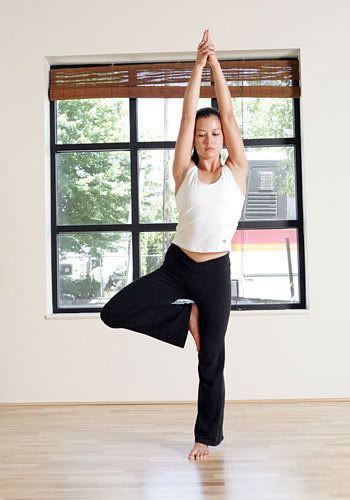 Yoga takes its origin from the Hindu religion with the goal to achieve full peacefulness throughout the mind and body. It is a very efficient stress relief technique because its very precise movements derive your attention away from the busy, stressful life to the current moment while undergoing different bodily positions that require concentration and balance. For more information on the history of yoga, visit this website: http://healthylifestyle.upmc.com/StressYoga.htm
Yoga has been shown to be very effective in increasing immunity, developing elasticity in the diaphragm, the stamina and the strength of other parts of your body. When you are under stress, the diaphragm becomes stiff. Yoga helps to stretch it so that it can handle all amounts of stress (physically, emotionally, or intellectually). Here are some benefits of yoga:
Health Benefits of Yoga:
-Improves flexibility and joint mobility
-Strengthens and tones muscles
-Increases stamina
-Improves digestion
-Lowers cholesterol and blood sugar levels
-Improves circulation
-Boosts immune response
Health Benefits of Yoga:
-Improves flexibility and joint mobility
-Strengthens and tones muscles
-Increases stamina
-Improves digestion
-Lowers cholesterol and blood sugar levels
-Improves circulation
-Boosts immune response
Mental Benefits of Yoga:
-Increases positive body awareness
-Relieves chronic stress patterns in the body
-Relaxes the mind and body
-Centers attention
-Sharpens concentration
Here is a great video clip of a man practicing yoga in India (advanced yoga, don't try this at home until you become an expert): http://youtube.com/watch?v=Hu9Sq1RvuoA
...and here's one for beginners: http://youtube.com/watch?v=C639ArXu1iw
Sunday, October 7, 2007
EXERCISE!
What do you do to relieve your stress? Take drugs, pain medication, drink alcohol, smoke, or maybe eat too much? You might feel that these things help you reduce your stress, but in reality it is actually making you more vulnerable and sensitive to more stress.
One major healthy way to reduce is to exercise. Come on, it's not that bad.... Exercise reduces the production of stress hormones and neurochemicals. Which in turn prevents you from damaging your body from prolonged stress. Some research suggests that exercising acts as an antidepressant, anxiolytic (fights anxiety), and sleeping aid for many people.
So how does exercise reduce stress?
-It pumps up your endorphins (your brain's "feel-good" neurotransmitters)
-It helps to better cope with your stressors
-It's meditation in movement
-It improves your mood
How do I get started?
-Consult your doctor
-Walk before you run
-Exercise in ways that you love (swimming, playing tennis)
-Pick a time and stick with it
How do I motivate myself to stick to it?
-Set goals (small goals at first, then gradually increase them)
-Find a friend
-Spice up your routines and change them sometimes
To help you further, here is a GREAT interactive site with more information about stress and how to manage it. It has some really beneficial tips:
http://www.nlm.nih.gov/medlineplus/tutorials/managingstress/htm/_no_50_no_0.htm
One major healthy way to reduce is to exercise. Come on, it's not that bad.... Exercise reduces the production of stress hormones and neurochemicals. Which in turn prevents you from damaging your body from prolonged stress. Some research suggests that exercising acts as an antidepressant, anxiolytic (fights anxiety), and sleeping aid for many people.
So how does exercise reduce stress?
-It pumps up your endorphins (your brain's "feel-good" neurotransmitters)
-It helps to better cope with your stressors
-It's meditation in movement
-It improves your mood
How do I get started?
-Consult your doctor
-Walk before you run
-Exercise in ways that you love (swimming, playing tennis)
-Pick a time and stick with it
How do I motivate myself to stick to it?
-Set goals (small goals at first, then gradually increase them)
-Find a friend
-Spice up your routines and change them sometimes
To help you further, here is a GREAT interactive site with more information about stress and how to manage it. It has some really beneficial tips:
http://www.nlm.nih.gov/medlineplus/tutorials/managingstress/htm/_no_50_no_0.htm
Friday, September 28, 2007
What does stress REALLY do to us...?
Ok, so we’ve established what stress is and what physical changes occur in your body during high stress levels, but is it really that important to control it? I mean we have better things to do then stress over our stress, right? The answer is YES, it is very important to maintain your levels of stress. Many of you probably already know that stress can lead to stomach ulcers and mental health problems such as, anxiety and depression, but here are some other effects you might not have know:
-Heart Disease: When our heart rate and blood pressure rise, it creates tension on our arteries which cause them to be harmed and damaged. During its recovery, artery walls scar and thicken which decreases blood supply and oxygen to the heart, and you what can happen then…a heart attack!
-Stress also weakens your immune system, which is your body’s defense system against bacteria and diseases. When this happens, your body is more prone to catching diseases and your body is helpless in fighting it off. Immune deficiency can also lead to arthritis, headaches and who knew, CANCER!
Although it seems impossible sometimes to take care of yourself, and keep your stress level to a minimum, with a little help and guidance from me, you will be on your way to a stress free lifestyle… at no charge!
The next topics I’ll cover finally, are ways to reduce stress.
-Heart Disease: When our heart rate and blood pressure rise, it creates tension on our arteries which cause them to be harmed and damaged. During its recovery, artery walls scar and thicken which decreases blood supply and oxygen to the heart, and you what can happen then…a heart attack!
-Stress also weakens your immune system, which is your body’s defense system against bacteria and diseases. When this happens, your body is more prone to catching diseases and your body is helpless in fighting it off. Immune deficiency can also lead to arthritis, headaches and who knew, CANCER!
Although it seems impossible sometimes to take care of yourself, and keep your stress level to a minimum, with a little help and guidance from me, you will be on your way to a stress free lifestyle… at no charge!
The next topics I’ll cover finally, are ways to reduce stress.
Monday, September 17, 2007
"Fight or Flight"
Before we can implement stress relief techniques or how to manage, we must first understand the mechanisms behind it. What really is “fight or flight,” you might ask. It is your response to a threatening situation. When you experience a shock or notice a threat, you rapidly release hormones that help you survive. These hormones help in order for you to run faster and fight harder. They boost your heart rate and blood pressure so that more oxygen and blood sugar is delivered to important muscles. In efforts to cool these muscles and help them stay efficient, they increase sweating. When in the risk of losing blood when hurt, the hormones divert the blood away from the skin to the core of our bodies. These hormones diverge our attention to the threat.
All these mechanisms improve our ability to survive life-threatening events. Recent research indicates that we experience the fight or flight response even when encountering something unexpected. This response is a normal part of everyday life and a part of everyday stress, but it is often with an intensity that is so low that we do not even notice it.
Here’s a link to a stress test for you to find out your stress level: http://www.lessons4living.com/stress_test.htm
Come back again for information on how to relieve stress…
Saturday, September 1, 2007
What is Stress?

I would like to begin this blog by just defining what stress is. Stress is also known as Psychological Stress. We all have felt stress before therefore, it should be easy to define it, but it's not. The reason stress is so hard to define is because it can be caused by a variety of different variables. Although many people have different definitions on stress, the most commonly used definition is: "stress is a condition or feeling experienced when a person perceives that demands exceed the personal and social resources the individual is able to mobilize."
The way we respond to stress is partially due to our instinct and partially due to the way we think. Stress releases chemicals and hormones that prepare us for action (Fight or Flight). If action is not taken then the stress response can lead to health risks. Stress that is unmanageable are the most harmful types of stress.
The way we respond to stress is partially due to our instinct and partially due to the way we think. Stress releases chemicals and hormones that prepare us for action (Fight or Flight). If action is not taken then the stress response can lead to health risks. Stress that is unmanageable are the most harmful types of stress.
Subscribe to:
Posts (Atom)